Image / video intake
On a boat, streaming live from a reef, or in the lab with pre-recorded footage. Drop it in.
Undersea reef-health control room
L.I.O.N. routes footage through multiple marine-detection lanes: a hosted lionfish watch, a hosted crown-of-thorns watch, and a marine-detect-style Reef Health Suite that can run through a remote Python service or a local fallback using your FishInv and MegaFauna models.
Program architecture
The flow now supports narrow invasive-species watches and a broader reef-health sweep. Hosted lanes stay deployment-friendly, while the paired Reef Health Suite opens a remote-service path for FishInv and MegaFauna without pretending those models belong inside a serverless bundle.
On a boat, streaming live from a reef, or in the lab with pre-recorded footage. Drop it in.
A call is made to the hosted model lane so each target species can be surfaced quickly.
Hosted lanes stay deployment-friendly, while the paired Reef Health Suite can run through a remote Python service or a local fallback.
The web app overlays detections in-browser so analysts can review clips without waiting for a dashboard export.
Run manifests, JSON payloads, and follow-on reporting stay ready for downstream model-analytics pages.
Live lab
The Live Lab now works more like an operations surface. Pick a hosted invasive-species detector for deployment-safe uploads, or switch into the Reef Health Suite and run FishInv and MegaFauna through a remote marine-detect service when one is configured.
Upload dock
Hosted invasive-species passes stay deployment-friendly, while the Reef Health Suite can call a remote marine-detect service or combine your FishInv and MegaFauna weights when you want broader ecosystem-health reads.
Hosted Roboflow invasive-species detector for lionfish images and video.
When enabled, L.I.O.N. records the completed run in the inbox panel below and sends class, confidence, and timestamp details through the configured SMTP relay.
Active preview feed
Run context
Current page state
Notification inbox
Completed runs land here with their detection summary, delivery target, and email send result so you can review notification history without leaving the Live Lab.
Run the Live Lab once and completed detections will appear here with their email delivery status.
Detection gallery
These slots now use actual prediction captures you supplied. Species without gallery media were removed from the visual wall and folded into the species coverage guide below so the site stays honest about what is shown.
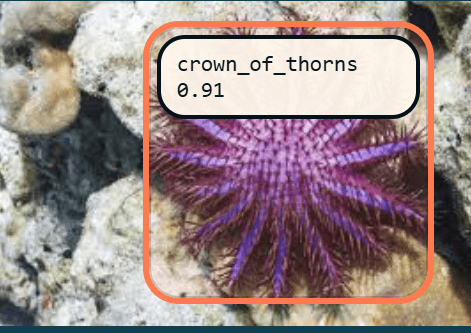 Predicted sample
Acanthaster cf. solaris
Hosted crown-of-thorns output ready for coral-risk review instead of a generic field-photo placeholder.
Outbreaks can strip live coral cover quickly, so this lane stays tuned for early intervention.
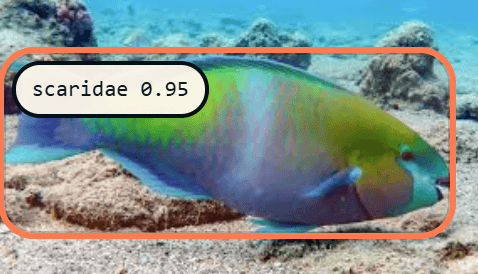 Predicted sample
Scaridae
Rendered with the family label the model actually predicts so the gallery stays scientifically clear.
Grazers like parrotfish help suppress algal overgrowth and support coral resilience.
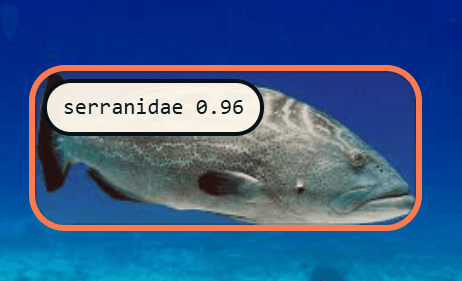 Predicted sample
Serranidae
A reef-suite predator class surfaced as Serranidae so the UI matches the model output users will actually see.
Groupers help contextualize predatory balance across the reef food web.
 Predicted sample
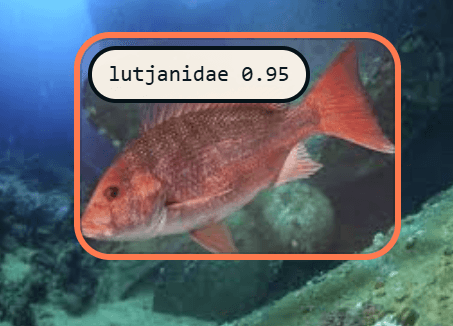
Lutjanidae
This gallery slot now uses the detected family label instead of a looser common-name placeholder.
Snappers are a dependable Indo-Pacific indicator class for routine reef-health surveys.
 Predicted sample
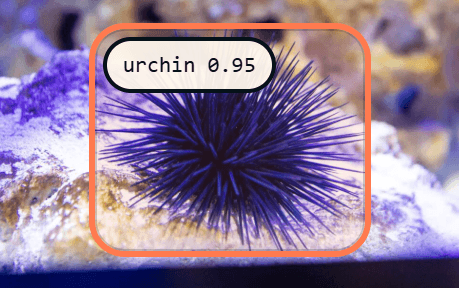
Echinoidea
Real prediction imagery replaces the old filler so this card now reflects the actual invertebrate lane.
Urchin density can hint at grazing pressure, algal shifts, and broader benthic imbalance.
 Predicted sample
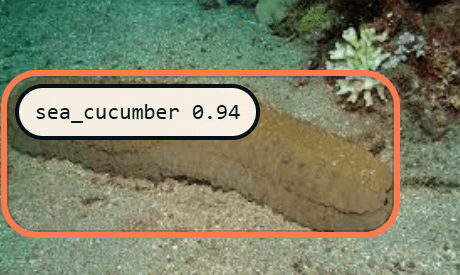
Holothuroidea
A seabed-health indicator card anchored to an actual predicted example from the current suite.
Sea cucumbers recycle nutrients and surface sediment-health signals that matter for reef chemistry.
 Predicted sample
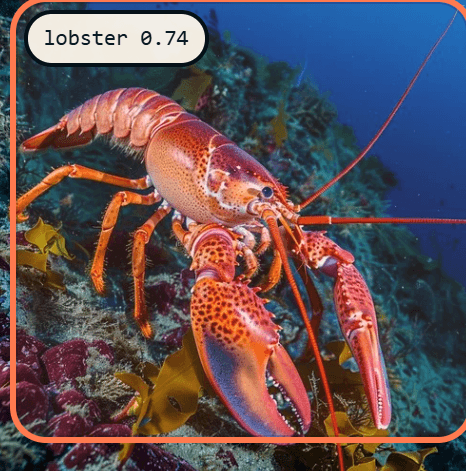
Palinuridae
The crustacean lane now shows a real model output rather than a placeholder thumbnail.
Lobster sightings add useful context around habitat complexity and shelter quality.
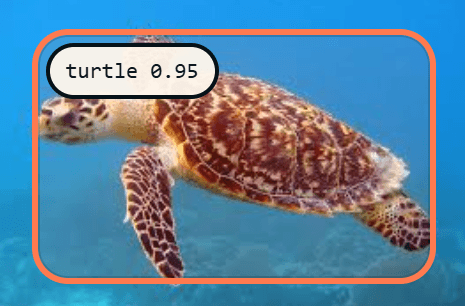 Predicted sample
Cheloniidae
A real megafauna prediction frame now stands in for the old repeated demo asset.
Sea turtle sightings help connect reef monitoring with larger ecosystem-health signals.
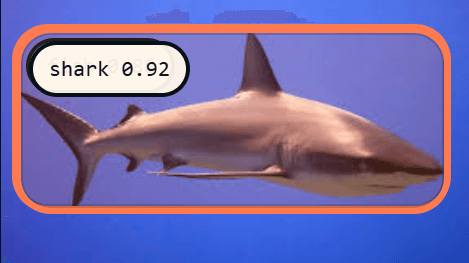 Predicted sample
Selachimorpha
This apex-predator card now uses the provided prediction image instead of a repeated hero loop.
Shark detections help frame top-down predator stability and protection success.
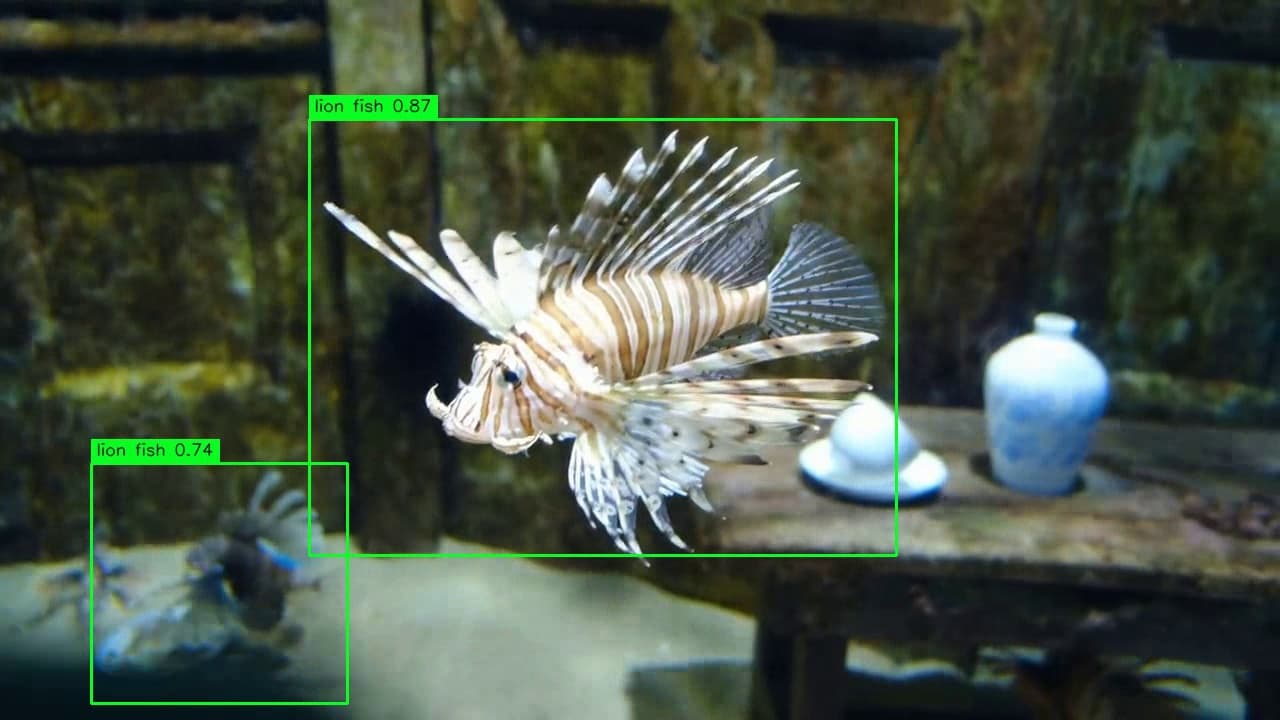 Predicted still
Pterois volitans / miles
This slot now uses a separate still from the lionfish prediction video so the gallery does not repeat the hero monitor.
Lionfish stays in the wall as the dedicated invasive-species watch for early removal and spread prevention.
Reef observation map
This map now uses a sparse, hand-curated set of realistic reef observations instead of a dense random CSV. It is meant to show likely watch zones for species L.I.O.N. can surface today, not fake global saturation.
Species slot
Outbreaks can strip live coral cover quickly, so this lane stays tuned for early intervention.
Model resources
Reporting and validation views live on their own pages so the homepage can stay focused on detection work.